The stack is chosen on the numbers
PostgreSQL or MongoDB, monolith or microservices, Node.js or Go: the choice comes after measuring load, volumes and the shape of the queries.
Quinck is a software house in Imola, in Emilia-Romagna. Nineteen people between engineers and designers, a company since 2021 and an SME since 2026. We design custom software, data and IoT platforms and cloud architectures on AWS.
Half of our work is working alongside teams that already exist: we take on a whole module, or put an architect next to the technical lead you have in the company.
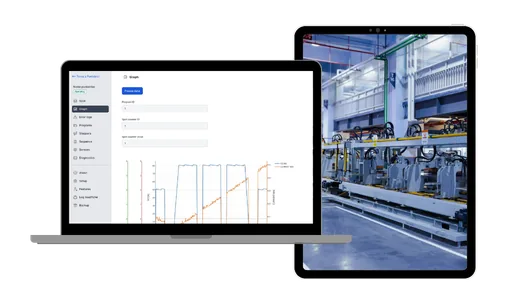
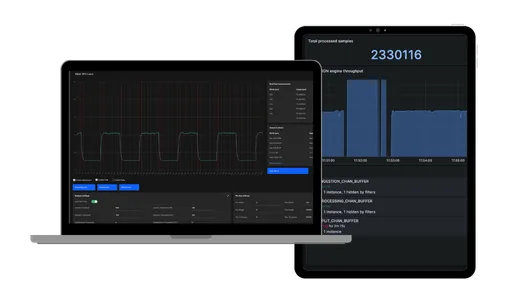
TypeScript, React and Next.js on the frontend, Flutter on mobile, Node.js with Fastify on the backend, Go on the machine when you need about 10,000 samples per second. PostgreSQL or MongoDB depending on load, AWS including serverless with Terraform and automated release pipelines, Modbus and OPC UA to talk to machines.
We experiment where it makes sense and stay on proven technology where stability matters. A new technology goes into production when it holds under load and when we know how to maintain it over the years.
We introduce microservices where the boundary between domains is clear, because a wrong boundary is paid for over years. The choices that are costly to change later we make at the start, with the project's numbers in front of us. The detail is on the Cloud and architecture and Data and IoT pages.
On the code we keep unit and end-to-end tests, observability from day one and writing that whoever comes after us can read without having to call us.
PostgreSQL or MongoDB, monolith or microservices, Node.js or Go: the choice comes after measuring load, volumes and the shape of the queries.
Unit and end-to-end tests, observability from day one, names that explain themselves and a pipeline that blocks the release before it reaches users.
A module taken on in full, or an architect next to the technical lead you have in the company. Half of our work is this.
On one project we weighed PostgreSQL against MongoDB for three days. When a decision does not convince us we say so, even if it comes from the client.
On the technical portfolio there is the catalogue of projects and research and development activities, with the detail a technical reader needs: what the problem was, how the architecture is built, where we took the wrong road.
Three write-ups with the technical choices laid out: R&W Tech, IMA and Vernice Italia.
Open the Quinck technical portfolioOn GitHub there is Multijet, our framework for microservice monorepos in TypeScript: from the OpenAPI contract it generates types, handlers and clients. On the blog we write about problems we really had, and one of the partners teaches at the University of Bologna.
At Quinck we join a project under way by reading the code and the pipelines before writing a line. In the first week we get builds, tests and environments running locally, then we take on one whole module, so the new code goes through the same pipeline as yours. Releasing stays in your team's hands.
With us the code is written by the same person you talk to in the meeting. There are 19 of us in Imola between engineers and designers, and we do not pass the work down chains of subcontractors. A project normally has two to four people, with one fixed technical lead for its whole duration.
We choose the database and the shape of the architecture on the project's numbers: data volume, shape of the queries, expected load. On one project we weighed PostgreSQL and MongoDB for three days before deciding. We introduce microservices where the boundary between domains is clear, because a wrong boundary is paid for over years.
We read from machines with Modbus and OPC UA, and we use Go on the machine when the frequency approaches 10,000 samples per second. The data goes up to the cloud on AWS through a pipeline that survives line interruptions and re-queues whatever did not get through. One example is the laser system built for IMA.
We install observability from day one, so we start from logs and metrics instead of guesses. Unit and end-to-end tests cover regressions, and the pipeline blocks the release before it reaches users. When the error is ours we say so, with a reconstruction of what happened and of what we are changing.
We publish Multijet on GitHub, the framework for microservice monorepos in TypeScript that generates types, handlers and clients from the OpenAPI contract. On the technical portfolio there are the projects and the research and development work, with architecture and choices, and on the blog we write about problems we really ran into.
Do you have an interesting technical problem, an architecture choice to discuss or an already sold project that needs someone to build it? We reply within one working day.